

Vape Repair and Custom Modding


Doc Mod

For Store Owners:

Vaporizer Reviews
Itaste SVD
This is a variable voltage and variable wattage device. In variable voltage mode, voltage can be set from 3.0 to 6.0 volts in .1 volt increments, and in variable wattage mode the SVD can be set from 3.0 to 15 watts in .5 watt increments. With the SVD’s three buttons, this is relatively simple: you use the “-” button to decrease voltage or wattage, and the “+” button to increase it. The SVD uses a “press and hold” system, sometimes with multiple buttons to set various functions such as: voltage/wattage mode, accessing the built-in atomizer resistance meter, and checking remaining battery voltage. While we’re getting used to the system with time, we’ve found ourselves referring to the manual quite a bit to figure out which ones to hit for which functions.
The SVD also uses a three-click system to turn the PV on and off, and has a locking function to prevent accidentally changing power settings. A three-digit LED display is used for user output, and the fire button will glow one of three colors when used — green, yellow, or red — to indicate remaining battery power.
Both 510 and eGo-threaded atomizers are supported by the SVD, and the connectors are set into a deep drip well to catch any atomizer leaks.

Smok Zmax
Users of earlier ZMax models will find much familiar here. It still sports a Provari-like single-button interface, with the familiar eight options. Through the interface, it is possible to turn the unit on and off, adjust voltage or wattage up and down, check battery voltage, configure what is displayed on the OLED when the button is pressed (voltage/wattage, atomizer resistance, or remaining battery power), turn
the OLED on and off, switch between variable voltage and variable wattage, and switch between mean and RMS modes. The ZMax V3 in variable voltage mode can be set from 3.0 to 6.0 volts in .1-volts increments, or 3 to 15 watts in .5 watt increments in variable wattage (or “power”) mode.
Telescoping ZMax with RSST
One significant difference from older ZMax models is the new OLED screen; Capable of using seven characters across two lines of output allows a lot more information to be displayed than the old three-character LED used by the original ZMax models, and takes a lot of the guesswork out of navigating the user interface. It is now much clearer what the different options mean, without having to remember cryptic menu codes.
We found the device to be fairly accurate, only straying up to .2 volts from what it was set for, across its entire range. The ZMax was by far more accurate than our eVic or Vamo, among others. It is quite likely to be the second most accurate mod we’ve tested, being barely beaten by the Provari.
As a bit of a stress test, we hooked up an AC9 RBA and turned our ZMax up to 15 watts. We were very impressed by how it performed, cranking out huge clouds of vapor.

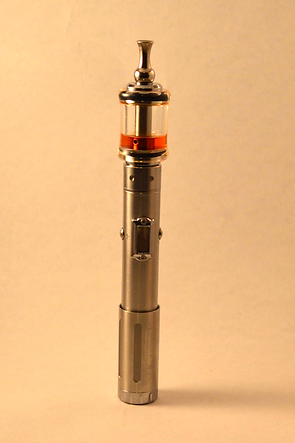
Wildfire VV
High quality mechanical parts , copper and electroplated chromes and CNC machined. Extended battery cup, you have variable choice of different kinds battery 18650, 18350, 16340 Voltage regulation from 3.0V to 6.0V by 0.1V once button-pushed , vice versa. The PCB circuit has full protection of low quiescent current,Reversely connected battery protection, over current and short-circuit protection. The Chipset's high effieciency keeps the output voltage which raises and drops accurate and steady.
The LCD displays the present power level, output voltage, and connected atomizer resistance at different operation modes.
There is also Electric Saving in locking Mode and a Low voltage alert. Benchmark: Provari
This mod is usually overlooked. I have found that if purchased in stainless steel this mod performs with the best of them Vs. the Chrome version which lacks current consistancy and accuracy.
Get Doc Mods Opinion before you buy. Email a request and it could get posted here! In the subject line enter "Review Request" send to docmod@outlook.com